|
|
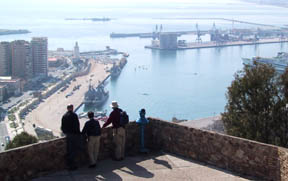
When in Malaga (as we were in February, 2001), you should visit the Gibralfaro, for if nothing else, it provides a commanding view of Malaga and its port. The Gibralfaro was built in the 14th century as a Moorish castle. It was later used by the Spanish as a military fort until the beginning of the 1900s when the military turned it over to the city. There is no entrance fee, but it is on top of the hill, with a strenuous walk up. However, the number 35 bus will take you to the top for 110 pesetas from the Paseo del Parque (there is a stop near the tourist office).
|
|
|
Just below the Gibralfaro is the Alcazaba, built between the 8th and 11th centuries by the ruling Moors. It is quite a labyrinth of gardens, passages, and palaces. The indirect means of entry was deliberate as it made entrance difficult by any invaders.
|
|
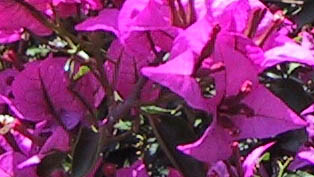
The walk from the Gibralfaro to the Alcazaba is much easier that going up and the path wends it way through gardens and providing great views of the part along the way. The bougainvilla brightens your walk down.
|
|
|
|
|
We came back again in 2002 when friends Michael and Mary visited us for their 20th wedding anniversary. We climbed up to the Gibralfaro and stopped on the way up to catch a shot of Mary, Michael and Jim with a view of Malaga city in the distance. In the left part of the picture is the lovely Ayuntamiento (city hall) with its garden.
|
|
When we visited the Alcazaba, we found that additional areas had been renovated and opened to the public. One of our favorite sites was this window (below) with its intricate carvings (that’s Verna sitting on the window ledge). While this Alcazar is minor in comparison to the Alhambra or the Alcazar in Seville, this window is a wonderful example of the exquisite craftsmanship of the Moors.
|
The town of Malaga has a great shopping district with lots of pedestrian ways and shops with everything you could need. There were several internet cafes we took advantage of and we found some great little restaurants off the main walkways that didn’t cater to the tourist trade (though they were concerned that we wouldn’t be able to understand the Spanish-only menu). There is a huge cathedral in the center of the old district, but we didn’t bother to visit it as they charged an entrance fee (aren’t we cheap!?!). For an afternoon stroll, you can’t beat the Paseo del Parque. This was our second trip to Malaga - for info on or first trip during the Christmas holidays see Christmas 2000.
Malaga Area:
|
|
|
At the southern edge of the Malaga province, we stayed for a few days near the small town of Manilva (2001), near the coast. There was a nice golf resort with small suites that made for a very enjoyable stay, even if we didn’t play golf. We found several nice restaurants for lunch along the waterfront just south of Estepona and a large Carrefour market in Estepona for just about everything else we needed. We also found this was a great place to drive to Gibralter for the day (about 40 minutes each way). There is also a bus that takes day trips to Morocco at a reasonable cost. The trip takes you to Algerciras where you board a fast ferry to Ceuta, the Spanish settlement on the north coast of Morocco. From there, another bus takes you overland through the Moroccan mountains to Tangiers. Lunch and a tour of Tangiers is included. Having taken the trip from Gibralter before, we would highly recommend this one instead. The ferry ride is much shorter and you get to see more of Morocco. Both tours gave us about the same time in Tangiers itself. See the Africa sub-section for more on Tangiers.
In the fall of 2001 we returned to this area to overstay the winter. We found a nice villa in the hills below Mijas and spent our 5 months resting, learning more Spanish, playing some golf (but found it too expensive), and preparing the bikes for the next segment of our journey. We became very familiar with parts of Malaga, as well as Fuengirola, Mijas, and Marbella.
|