|
 |
|
|||||||||||
|
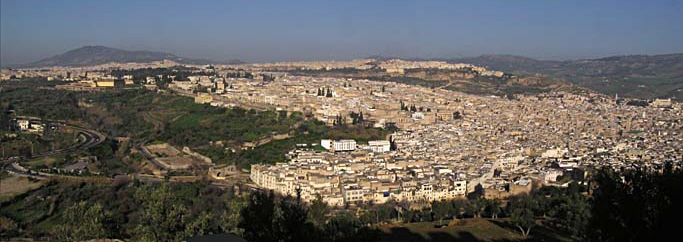
Fès was the favorite of almost everyone in our tour group. The Medina or old town is the highlight, full of narrow, winding streets, colorful and interesting shops, and lots of history. The photo below is the view of Fès from the hill opposite the city. The lower right part of the city is the medina, in the center of which is the Kairaouine University established in 859.
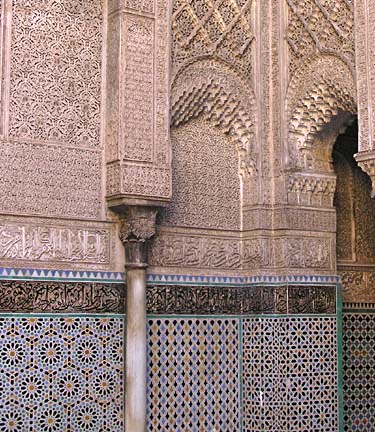
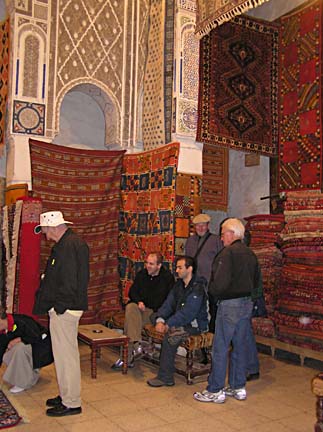
While all the shops were quite interesting, the most fascinating for us was a visit to an old medersa, built in 1280. While it is in need of restoration, the quality of the original work and materials was absolutely outstanding. The photo above left shows just a portion of the detail work that makes this medersa so special. Like most Islamic buildings, the medersa was made of the same basic materials: carved plaster (made of plaster and ground marble for long life), cedar wood (to provide a good scent and provide weather-resistance), marble, and mosaic tile work. The marble is Carrera marble from Italy and at the time the medersa was built, the Moroccans traded their sugar for the marble. We think the Moroccans got the better deal, since the sugar is long gone and the marble is still standing. And yes, we did get drug into the carpet shop for the hard sell. This seems to be a staple on the medina tours, regardless of the city. So we take advantage of it by enjoying the views of the gorgeous carpets (Verna’s favorites are the silk ones), but firmly stick to your guns about not wanting to buy. The photo above right shows the men in our group gathering at one end, as the salesmen definitely were targeting the women for the hard sell.
Overall, we enjoyed our visit to Fès and readily recommend it to anyone visiting Morocco. However, you might want to consider hiring a guide to get the best views of the medina and avoid getting lost. Click here for a slideshow of Fès. |
|||||||||||||
 |
|||||||||||||
|
If you find typographical errors or have any other problems when looking at the site please contact the Webmaster describing the problem and the page involved. |
|||||||||||||
|
Copyright © 2000-2009 Jim Seavey and Verna Norris All Rights Reserved |
|||||||||||||