|
 |
|
|||||||||||||||
|
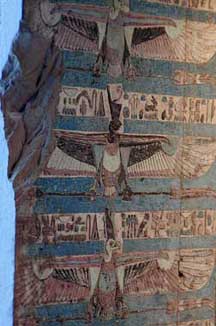
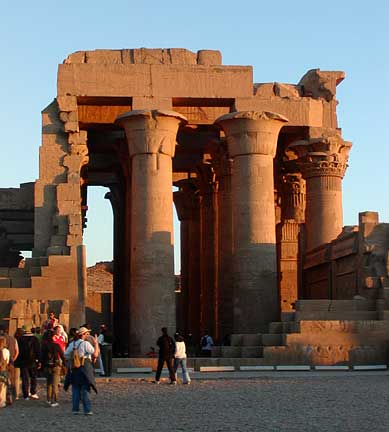
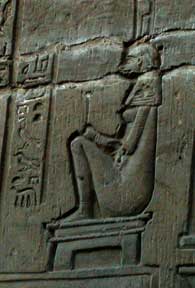
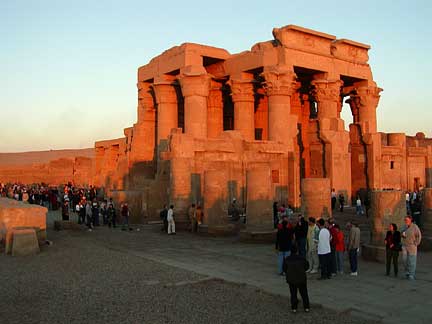
Kom Ombo was the last stop of our first day on the Nile as we cruised from Luxor to Aswan in January 2003. On this site sits the temples of Haroeris and Sobek created during the last few hundredyears before Christ. The temples were built on a bend in the Nile which caused both their protection and destruction. The sand from the Nile built up in the temples, covering them and protecting them from exposure. However, the Nile also washed away a good portion of the forecourt. The front of the temple is now the Hypostle Hall (pictured above, right). There is little of the ceiling remaining, but a portion of it (above, left) shows the detail it was afforded.
As we were leaving, the sun was setting upon the temple, providing a rather ethereal look to the already imposing site (above right). |
|||||||||||||||||
 |
|||||||||||||||||
|
If you find typographical errors or have any other problems when looking at the site please contact the Webmaster describing the problem and the page involved. |
|||||||||||||||||
|
Copyright © 2000-2009 Jim Seavey and Verna Norris All Rights Reserved |
|||||||||||||||||